

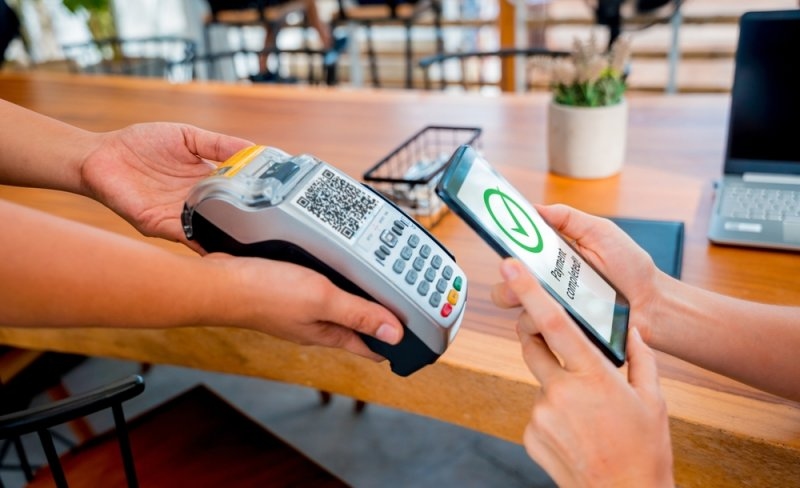
If you’ve ever paid a bill online, tapped your phone to pay at a register, or sent money through a banking app—it probably feels routine.
But there’s a whole network of technology making it work. Digital payments move money without the hassle of cash while giving both businesses and consumers speed and convenience.
Digital payment is the transfer of money from one party to another. Think paying with a debit card, using a mobile wallet, sending money through your bank online, or paying for a subscription—all digital payments.
These transactions can be partly or fully digital. When a payment’s truly digital, it stays electronic from start to finish, and a bunch of players get involved: the one paying, the one paid, their banks, payment networks, and the tech that actually makes it go through.
From your side, paying digitally feels easy. But behind the scenes, it’s busy. First, you start a payment with a card, app, wallet, or website. Then the system checks that you are who you say you are and makes sure you can actually pay. Once approved, the transaction gets processed, and your money lands on the other side, either in seconds, minutes, or sometimes after a couple of business days.
So, while it might just look like tapping your phone or clicking “pay now,” there’s a lot connecting banks and payment tech to move your money safely.
Common types are:
Digital payment for businesses is a real-time saver. One benefit of digital payments is that they cut out a lot of headaches—no more printing or mailing checks, no manual tracking, no endless reconciling. Since everything’s electronic, it’s easier to keep tabs on where your money’s going.
Another benefit of digital payments is that your customers appreciate smooth payments. Quicker checkouts and more choices keep things moving, and good electronic records make it much easier to track money coming in and going out. If your company deals with people in other states or other countries, digital payments are a huge help for handling remote transactions.
Keeping digital payments safe takes many layers of defense. There’s authentication—which could be passwords, PINs, biometrics, or two-factor methods. Encryption keeps your info safe between systems, and tokenization swaps out sensitive payment details for more secure tokens.
Today’s digital payment security is smart enough to spot odd behavior and potential fraud and can even set up limits for spending. Virtual cards, for instance, come with their own rules for how and where they’re used. Nonetheless, basics are essential: passwords should be safe, accounts need to be managed well; and a trusted page builder payment processor must be used.
How people and businesses pay is changing fast. Mobile and contactless payments keep speeding up checkout. QR codes and digital wallets mean you don’t have to punch in your card numbers each time. Virtual cards help companies get a grip on employee and vendor spending.
Automation is taking over, too. More often, payment systems connect to accounting and business systems, so transaction details move through without anyone typing things in twice. AI now helps spot sketchy transactions and fight fraud. Not only are these trends taking digital payments technology far beyond transactions, but they are also transforming it into a fully connected & automated system.
More integrations. The future of digital payments will do even more of your banking, shopping, accounting, and other tech. The pace will accelerate; you'll wait less, and processes like invoicing and reimbursements will be more efficient through automation.
Security will stay critical as things get more connected—so you’ll see even stronger logins, tougher encryption, more advanced fraud checks, and clearer transaction histories. The real future isn’t just fast payments, but payments that are easy to manage and safeguard.
Digital payment technology has totally changed how money moves between people, companies, and banks—everyone. Cards, bank transfers, mobile wallets, and virtual cards—they all help us pay and get paid without touching actual bills or writing checks. As this tech keeps getting better, businesses get faster payments, more automation, and smarter security.
Getting the basics of digital payments makes it easier to pick the right way to pay depending on what matters to you, whether it’s speed, convenience, security, or just keeping your accounts in order. The right digital payment choice can make regular transactions and entire business operations run smoother.
Digital payments have security features that cash does not, such as authentication, encryption, tokenization, and transaction logs, but safety depends on the service, account security, banking or financial security, and how well the account holder protects the payment information.
It depends on the service, but many forms of digital payments can be made using a stored-value account or other non-banking institution account. Some digital payments can be made without a bank account at all.
Sometimes they are almost instant; sometimes they can take days. It depends on the service and the type of transaction. If it is ACH, it will likely take longer than a wire transfer or other faster payments.
The business should consider what forms of payment they want to accept, what fees are involved, how fast the payments are processed, and what level of security is needed for the transactions they will be processing, plus how easy it is to do accounting and reporting with the service, their level of customer support, and if the volume is high enough that the provider can handle it. International businesses should also consider exchange rates and services that facilitate international payments.
Any number of things could cause it, such as there not being enough funds in the account, wrong information being entered, there being an error on the financial institution's end, the transaction being flagged for some reason, or the banks involved not allowing the transaction for some reason. The payment service or bank should inform the customers of what caused it and how to prevent future issues.
This content was created by AI